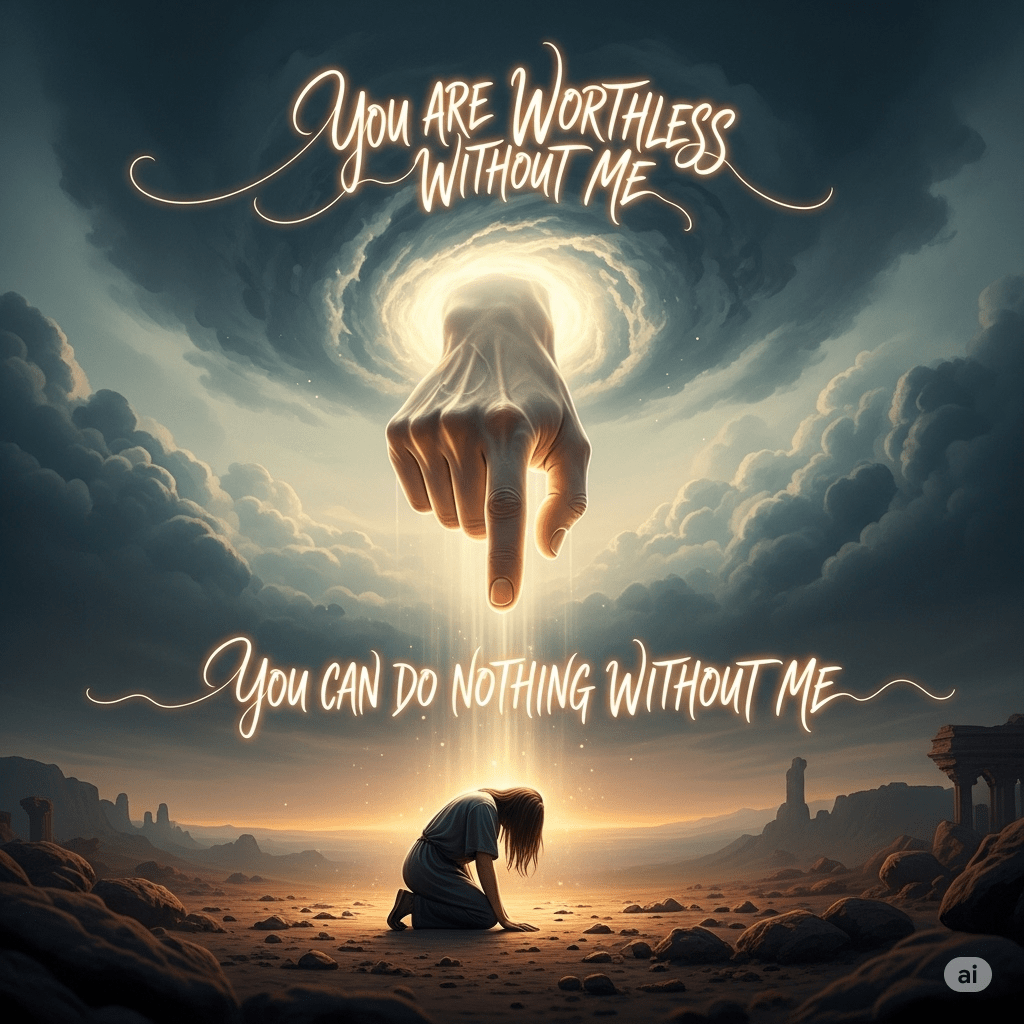
When I first came to Christianity, I thought I had found the ultimate truth, the meaning of life, the cure for guilt, and the key to happiness. The church welcomed me with open arms. People said they were praying for me, calling me “brother,” and telling me God had an incredible plan for my life. It felt good, really good.
But underneath that warm welcome was something I didn’t recognize at first: a system designed to make me doubt myself, fear thinking freely, and depend completely on the Bible and the church for my sense of worth.
Looking back now, I can see the steps clearly and they’re eerily similar to the psychological tactics cults use.
Step 1: The Love-Bomb Phase
Church is where everyone seems so happy to see you. “God loves you unconditionally!” they say. You get coffee, smiles, and endless “welcome” handshakes. It feels like you’ve found a family you didn’t even know you needed.
But in hindsight, that warmth wasn’t just friendship. It was a hook. Once you’re emotionally invested, you’re more likely to accept whatever comes next.
Step 2: You’re Broken — and It’s Your Fault
Enter the doctrine of original sin. Before you’ve done anything wrong, you’re told you’re already guilty, born a sinner because of Adam and Eve.
This isn’t “you made a mistake.” It’s “you are a mistake.” Without God, you’re worthless, your good deeds are “filthy rags” (Isaiah 64:6), and your heart is “deceitful above all things” (Jeremiah 17:9).
Once you believe you’re fundamentally broken, you’re primed to depend on an outside source. In this case, God and the church — for your identity.
Step 3: Don’t Trust Your Own Mind
If you start noticing contradictions, abuse in the church, or questionable morals in scripture, you’re quickly reminded:
“Lean not on your own understanding.” — Proverbs 3:5
“The wisdom of the world is foolishness to God.” — 1 Corinthians 3:19
In other words: Don’t think too much. Just obey.
I can’t count how many times I swallowed doubts because I was told that questioning was prideful rebellion. My brain was effectively trained to distrust itself.
Step 4: Fear Is the Leash
Hell isn’t just a concept, it’s the ultimate stick to keep you from wandering too far. Disobey God? Eternal fire. Walk away from faith? Everlasting regret. Even if you’re “saved,” you’re warned that God can “discipline” you harshly in this life to bring you back in line.
When fear is the backdrop of your worldview, “choosing” God isn’t really a choice. It’s survival.
Step 5: The Vulnerability Trap
Life hits hard. Sickness, loss, depression, failure. In those moments, the message kicks in: See? You can’t do this without God.
Your struggles become “proof” that the Bible was right all along:
Feeling lost? That’s your sinful nature.
Feeling anxious? You’ve strayed from God.
Feeling hopeless? You need to pray harder.
It’s a self-reinforcing loop.
Step 6: Us vs. Them
Soon, you see the world through church-colored glasses. Believers are the “saved,” outsiders are “lost” or “deceived by Satan.” Friendships with non-believers feel discouraged, worldly knowledge becomes suspect, and anything that challenges scripture is written off as dangerous.
You end up living in a bubble where only church-approved truth is safe.
Step 7: The End Goal — Robotic Obedience
The Bible’s consistent message is simple: submit to God fully or suffer the consequences. Adam and Eve were punished for seeking independent knowledge. Jesus praises those who become like little children, unquestioning and dependent.
This isn’t about free will. It’s about controlled will. The “choice” is an ultimatum:
Love God or burn forever.
That’s not a relationship, it’s coercion.
Why I’m Writing This
I used to believe that submitting to God was noble, even freeing. Now I see it for what it is: a system that starts by making you feel loved, breaks down your self-worth, discourages independent thought, and then offers itself as the only solution.
The irony? I was told God gave me a mind. But the moment I used it honestly, the entire structure began to crack. And once I stepped outside, I realized I hadn’t found freedom in faith. I had found freedom from it.
If you’re reading this and you’re still inside that cycle, I’m not here to shame you. I know how comforting it feels when life is scary and uncertain. But you have the right and the ability to think for yourself without the constant threat of eternal punishment hanging over your head.
Your worth isn’t borrowed from a deity. You were never broken to begin with.
 leavingfaithbehind.com
Share your thoughts