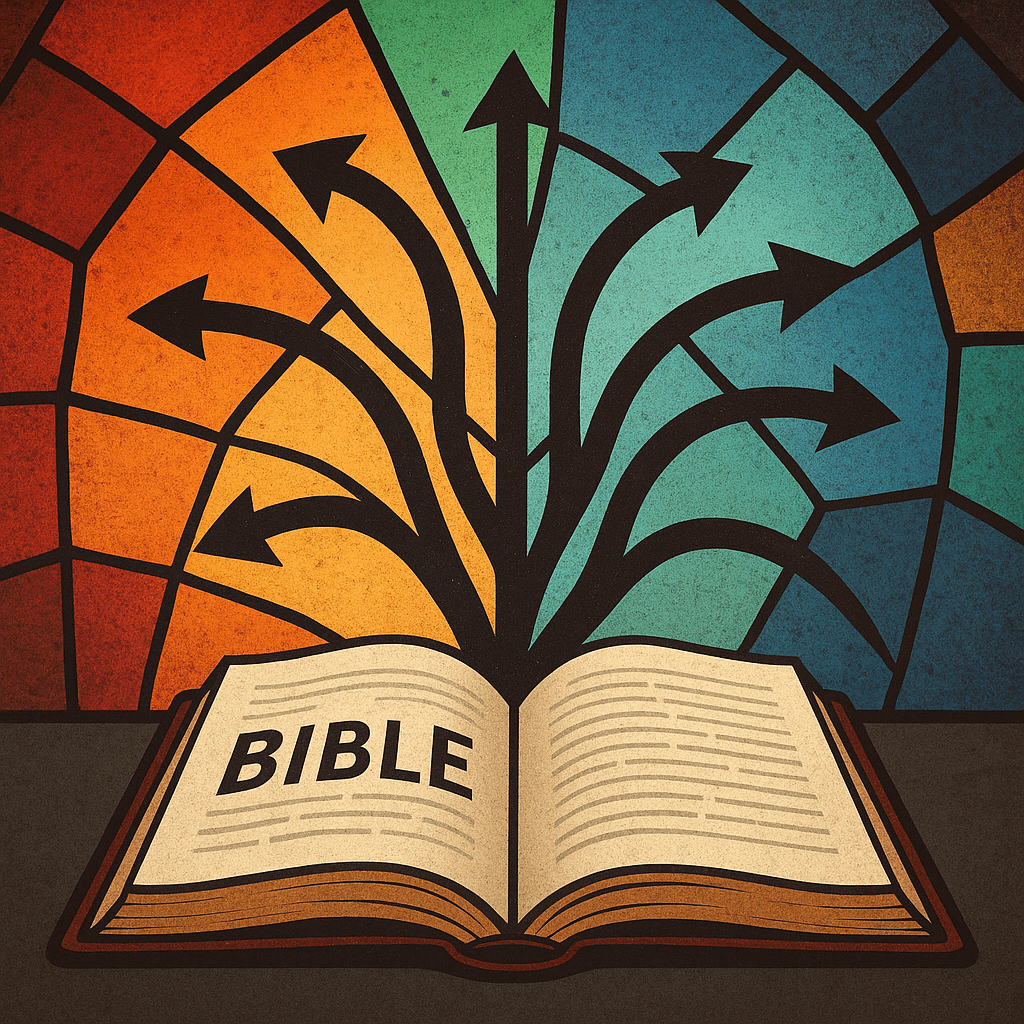
When I was a Christian, I often came across verses that sounded so absolute and powerful that I wondered, If this is really true, why doesn’t it look that way in reality?
One such verse is 1 John 2:27:
“But the anointing that you received from him abides in you, and you have no need that anyone should teach you. But as his anointing teaches you about everything, and is true, and is no lie, just as it has taught you, abide in him.”
This verse makes a bold claim: if you have the Holy Spirit, you don’t need teachers, because the Spirit himself will teach you “everything.”
At the time, I tried to believe this. I prayed for guidance, read the Bible, and waited for the Spirit to teach me directly. But here’s what struck me: if the Spirit really teaches every believer directly, then why do we have the New Testament, seminaries, pastors, endless denominations, and constant debates about what Christianity even means?
The Contradiction in Practice
Think about it. Christianity is built on teachers, preachers, priests, theologians, commentaries, conferences, and centuries of church councils more than Christ or the holy spirit. The very existence of all these shows that believers do need teachers. Christians who have “genuinely received Christ” should be like-minded, because they’re supposedly guided by the same Spirit.
If the verse is true, pastors are unnecessary. So are Bible colleges. So are study guides. But reality says the opposite: without teachers, the church collapses into confusion.
The Denomination Problem
If the Holy Spirit truly teaches believers “everything,” shouldn’t all Christians agree on what’s true? Instead, we see tens of thousands of denominations, each claiming they have the correct Spirit-led interpretation.
A Pentecostal insists the Spirit showed them tongues are essential. A Baptist says the Spirit showed them baptism is symbolic. A Catholic says the Spirit confirms the authority of the Church. Jehovah’s Witnesses claim the Spirit supports their doctrines.
They can’t all be right. Yet every one of them says, “The Holy Spirit taught me.”
Why Then the Bible?
If the Spirit really “teaches all things,” why was the New Testament needed? Why did the early church fight for centuries over which books belonged in the canon? Why so much confusion over translation, context, and meaning?
If the Spirit was guiding believers clearly, there shouldn’t have been disputes, councils, or endless commentary. Yet history shows the opposite: the church has always been divided and confused.
Another Problem: Human Errors and Non-Eyewitness Accounts
If the Holy Spirit is real and truly guides believers who “abide in him,” why does God seem to rely on such fragile, unreliable means to communicate his truth?
- The Bible we have today is the product of translation after translation, full of known errors, mistranslations, and interpretive biases. Whole doctrines have been built on single words that translators struggled with.
- Most of the New Testament writings are not eyewitness accounts. The Gospels were written decades later, by anonymous authors, in a language (Greek) that Jesus and his disciples probably didn’t even speak.
- If the Spirit is directly teaching believers, why do they still have to depend on fallible manuscripts, councils, copyists, translators, and preachers just to piece together what God supposedly said?
It doesn’t add up.
If God truly wanted his message clear and his Spirit was truly guiding, he wouldn’t need fragile human transmission systems that leave believers confused for centuries. He wouldn’t risk his “Word” being distorted by politics, councils, copyist errors, or theological agendas.
Instead, what we see looks exactly like what it is: human writings, shaped by time, culture, and error—passed down through fallible hands.
👉 If the Holy Spirit directly teaches, why does God rely on mistranslations, anonymous authors, and centuries of debate just for someone to “know” his word?
That question alone was enough for me to realize the system doesn’t make sense anymore.
My Personal Takeaway
I remember asking myself: Am I the problem? Maybe I’m not praying enough. Maybe I’m not sensitive enough to the Spirit. But then I noticed something, every Christian around me was doing the same thing. Everyone prayed for guidance. Everyone claimed the Spirit was teaching them. Yet everyone landed in different places.
That’s when it hit me: what Christians call “the Spirit’s teaching” is often just their own conscience, emotions, or cultural conditioning. It’s why two sincere believers can both claim the Spirit’s leading and yet passionately disagree.
The Big Question
So here’s the question that shook my faith:
👉 If the Holy Spirit truly teaches, why do Christians need the Bible, pastors, denominations, and centuries of theological arguments just to figure out what to believe?
The reality I see now makes much more sense without the Holy Spirit in the picture. Humans are simply doing what humans always do – arguing, interpreting, building systems of belief, and trying to make sense of ancient writings.
Final Thought
If this Spirit truly existed, we should see unity, clarity, and consistency among believers. Instead, we see division, confusion, and endless reinterpretation. To me, that speaks louder than any verse.
 leavingfaithbehind.com
Share your thoughts